open hardware
Open plans for creative computers you build, adapt and repair yourself. The first Chorion device is a round screen held in two hands, with camera, microphone, motion and biofeedback sensors — and Chorion also runs on other Linux computers.
Biofeedback
Your fingertips rest on two sensors in the sides of the shell. The device reads heartbeat, heart-rate variability, oxygen and breathing — and can turn them into light, sound and motion. For calm, for focus, for performance, or as raw material for a piece.
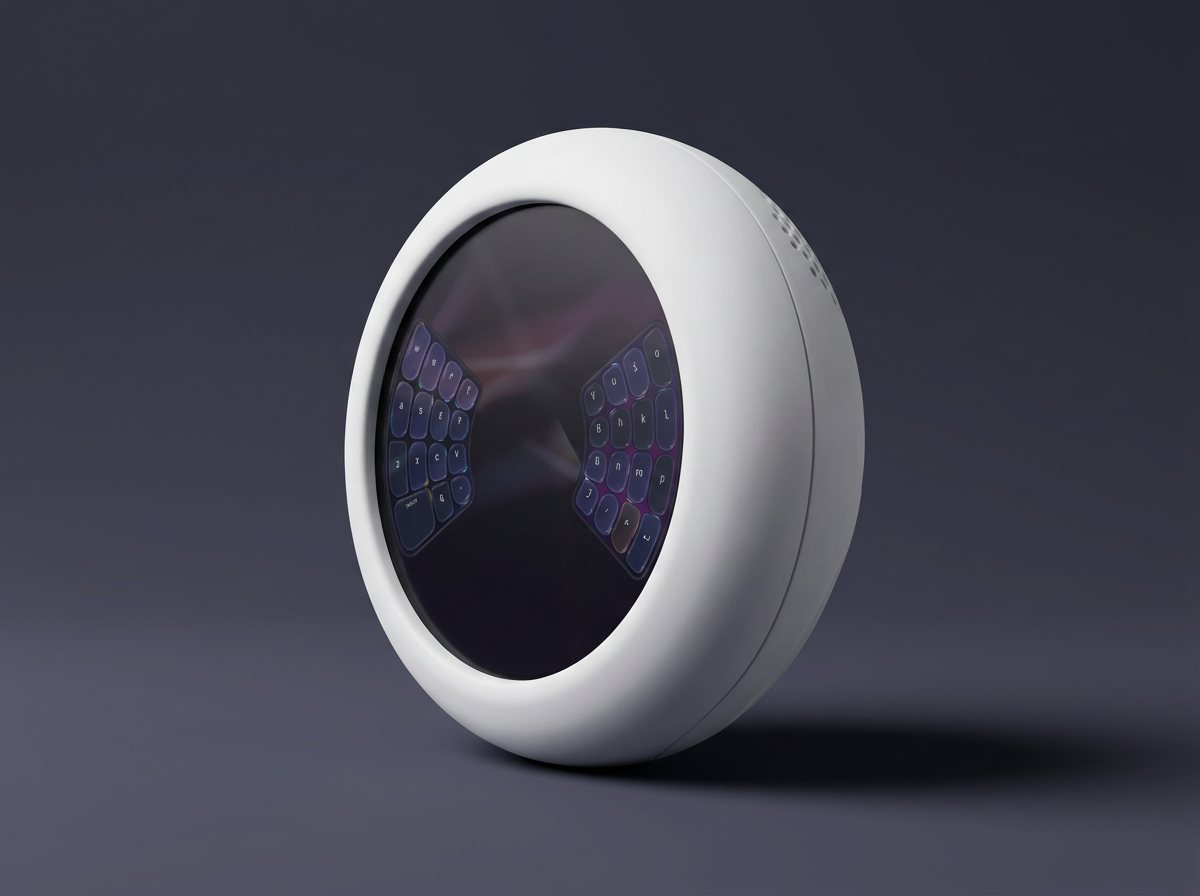
Interface
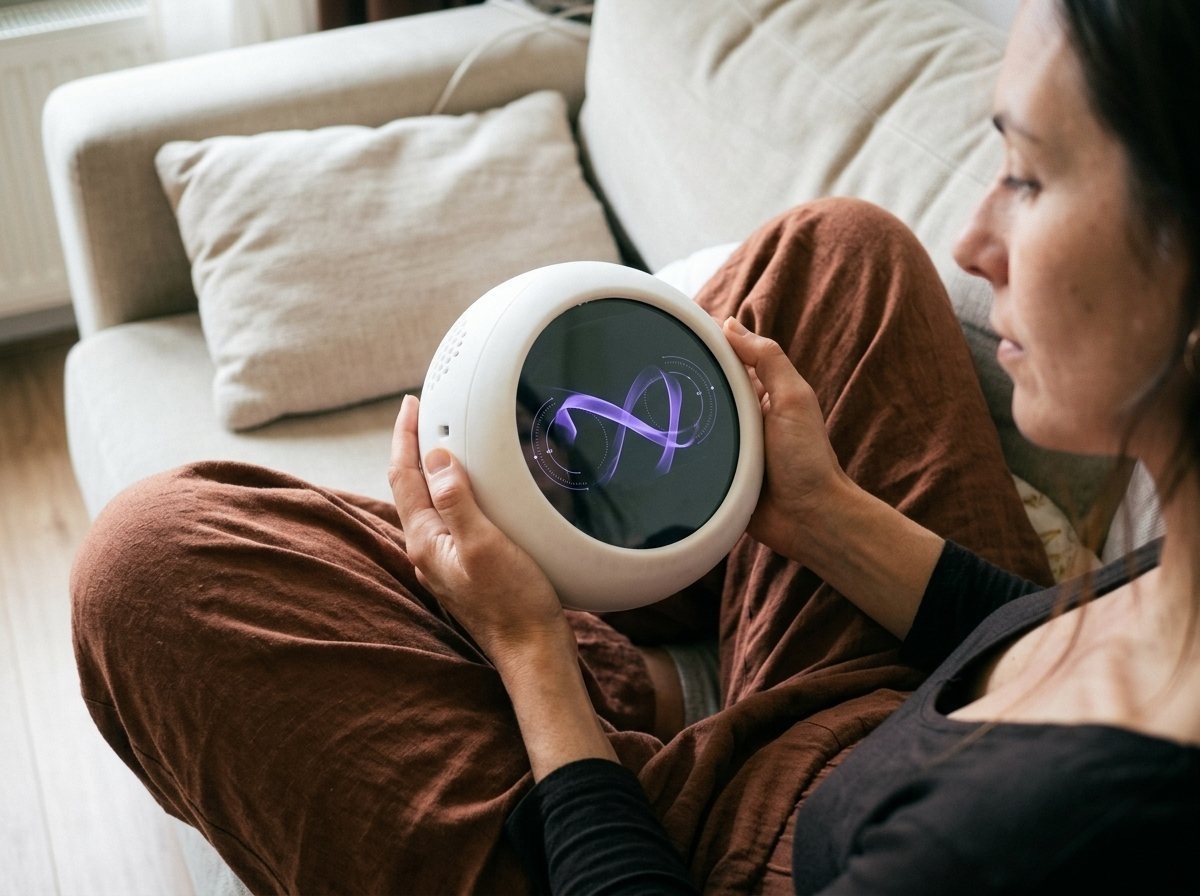
Everything on screen is designed for the circle and for thumbs. Typing, for example, uses a split keyboard: one half under each thumb, with long-press for capitals, punctuation and whole words.
Components
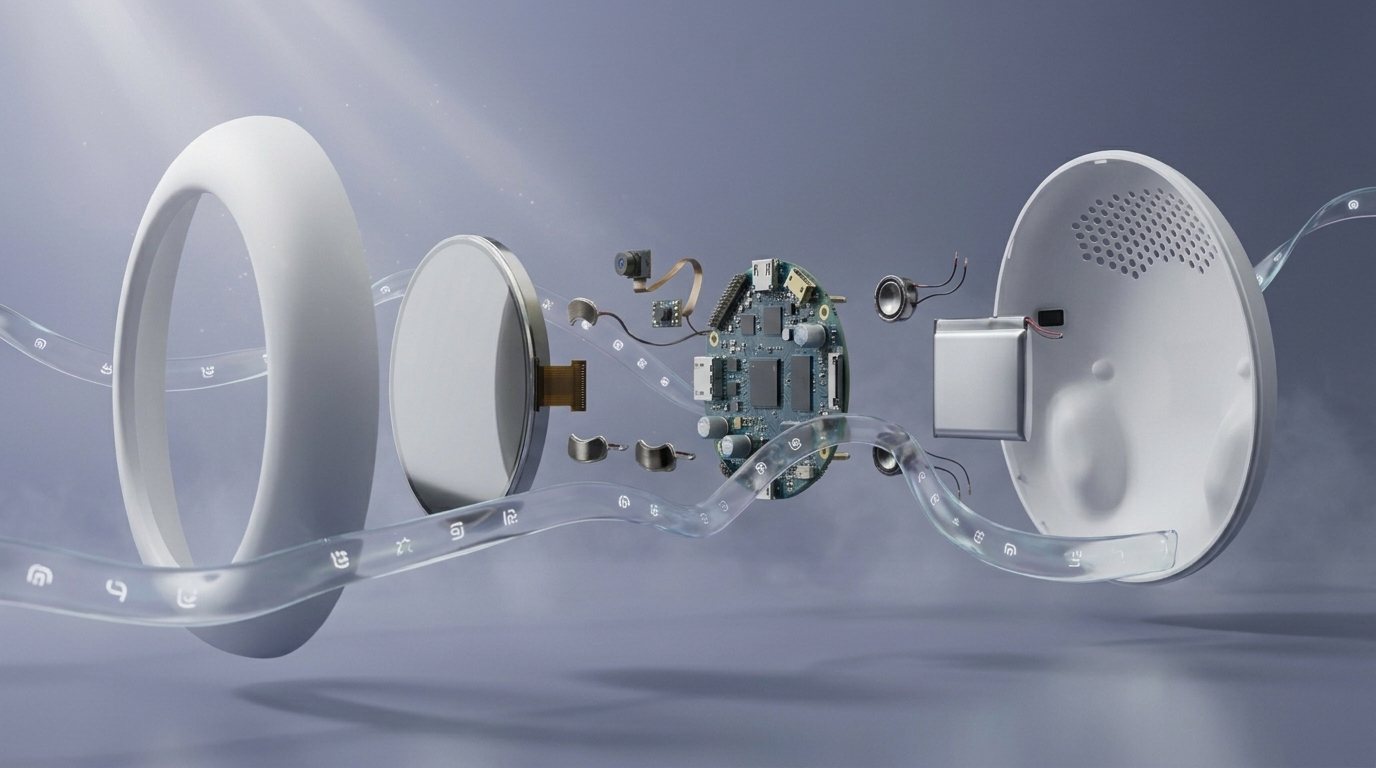
Radxa Dragon Q6A single-board computer (Qualcomm QCS6490, 8 cores, 12 GB memory, built-in AI chip) running Chorion OS.
Round 5-inch touch display.
Wide-angle camera, microphone, and a motion sensor that knows how the device is turned and moved in space.
Two finger rests on the sides of the shell hold the sensors: heart rate, heart-rate variability, blood oxygen and breathing rhythm, read while you simply hold the device.
Two speakers with amplifier behind a hexagonal grille.
Built-in rechargeable battery pack — take it into the room, the street or the classroom.
A wide, flat pebble shape made to rest in both hands — fingers on the sensors, thumbs near the screen.
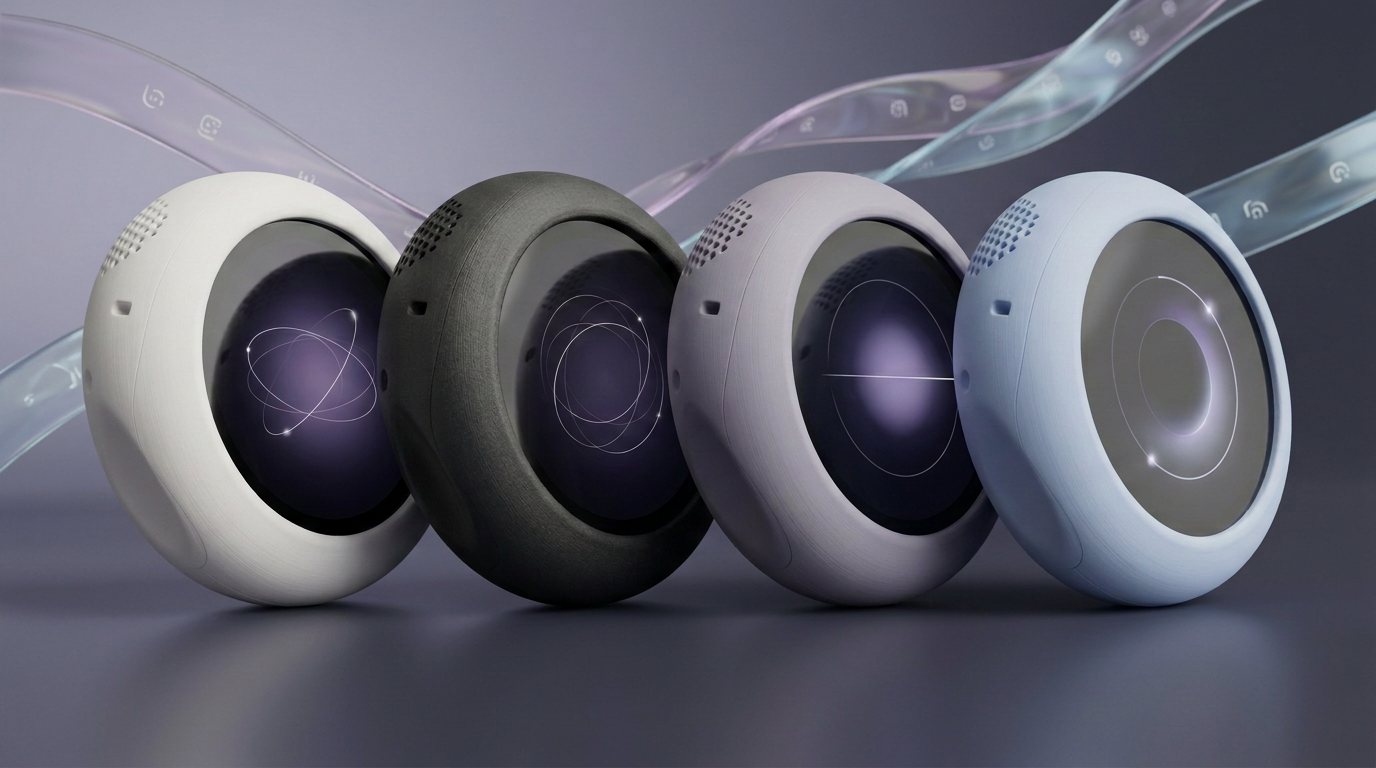
Two 3D-printed shells; a small flat cut in the base lets it stand on its own, leaning back. Reprintable in any colour or texture.
Mobile and standing — the personal device.
The bare, open build for makers and classrooms.
Home base with GPU for heavy generation, shared by a group.